Understanding Junk Food: From Concept to Creative Execution
In the landscape of modern nutrition and cultural discourse, Junk Food occupies a complex position. It is not merely a category of edibles defined by high caloric density and low nutritional value; it is a phenomenon that intersects with psychology, economics, time management, and even creative expression. For professionals navigating busy schedules, from entrepreneurs to educators, understanding the role of processed convenience foods is essential for maintaining both personal health and operational efficiency. While often demonized, these items serve specific functions in a broader lifestyle workflow, acting as quick fuel, comfort mechanisms, or, in unique contexts, sources of artistic inspiration.
To integrate an awareness of Junk Food into your daily routine effectively, one must first define its parameters beyond the label. Technically, these are ultra-processed items engineered for hyper-palatability. They typically contain elevated levels of refined sugars, saturated fats, and sodium while lacking fiber, vitamins, and minerals. However, in a practical workflow context, they represent the "quick win" or the "immediate gratification" node in a decision tree. Recognizing this allows individuals to manage consumption strategically rather than reactively.
The Role of Convenience in High-Pressure Workflows
For freelancers, small business owners, and corporate leaders, time is the most scarce resource. The allure of Junk Food lies in its accessibility and speed. When a project deadline looms or a critical decision needs to be made within minutes, the cognitive load required to prepare a whole-food meal can feel prohibitive. In this scenario, processed snacks function as a stopgap measure. They provide immediate glucose to the brain, temporarily boosting focus and energy levels.
However, relying on this shortcut without a containment strategy leads to the well-documented "crash." The rapid spike in blood sugar is followed by a precipitous drop, resulting in brain fog and fatigue—states that are detrimental to productivity. A practical approach involves treating these items as emergency reserves rather than staple fuels. Just as a project manager keeps a backup vendor on file, keeping a limited supply of these foods for genuine emergencies ensures they remain a tool rather than a crutch.
- Preparation: Keep healthier alternatives within arm's reach to reduce the friction of making a good choice.
- Timing: Consume high-sugar items only when immediate physical exertion or intense mental sprinting is required.
- Portion Control: Pre-package servings to prevent mindless consumption during deep work sessions.
Junk Food as a Creative Medium and Cultural Artifact
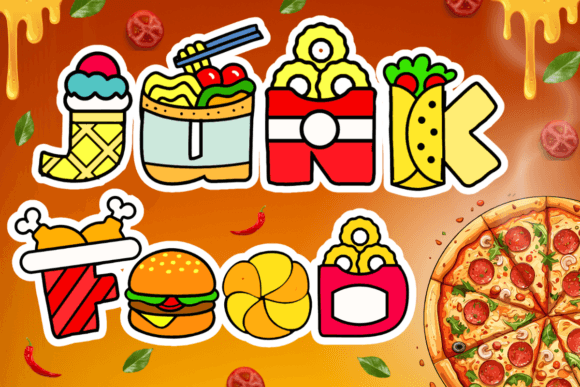
Beyond nutrition, the concept of Junk Food has permeated the creative industries. Marketers, graphic designers, and content creators often utilize the visual language of fast food to evoke nostalgia, humor, or critique consumer culture. There is a niche yet fascinating intersection where "Junk Food" becomes a fancy type of writing or design aesthetic. In this artistic interpretation, each letter of the phrase might be constructed to resemble a different kind of unhealthy snack—burgers forming the 'J', fries shaping the 'u', and candy outlining the 'k'.
This stylistic choice is not merely decorative; it serves as a powerful communication asset. For bloggers and publishers, using such imagery can instantly signal a topic's tone, bridging the gap between serious nutritional analysis and pop culture commentary. It demonstrates an understanding of the subject matter's dual nature: it is harmful yet beloved, destructive yet culturally ubiquitous. Integrating this visual metaphor into branding or editorial headers can increase engagement by leveraging the viewer's existing emotional connection to these foods.
When executing a creative campaign centered around dietary habits, consider how the aesthetics of processing and artificiality can be highlighted. This does not mean glorifying poor health, but rather acknowledging the reality of the modern diet. By visually deconstructing the components of a burger or a soda into typographic elements, creators can prompt audiences to think critically about what they consume while maintaining a playful, accessible vibe.
Strategic Integration and Compatibility
Integrating a realistic view of Junk Food into a health or business plan requires assessing compatibility with long-term goals. Total abstinence often leads to bingeing, a cycle that disrupts consistency. Instead, adopt a framework of "planned indulgence." This method aligns with agile methodologies used in software development and project management: iterate, review, and adjust.
Consider the following workflow for managing dietary choices alongside professional obligations:
- Audit: Track current consumption patterns for one week without judgment. Identify triggers such as stress, late-night work, or social meetings.
- Substitute: Find compatible alternatives that satisfy the same craving (e.g., salty, sweet, crunchy) but offer better nutritional profiles.
- Schedule: Designate specific times for less healthy options, ensuring they do not interfere with peak performance windows.
- Review: Evaluate energy levels and mood post-consumption to refine future decisions.
This process-oriented approach removes the moral weight from food choices, framing them instead as data points in a larger system of personal optimization. It acknowledges that while Junk Food may not support biological longevity, it can fit into a sustainable lifestyle if managed with the same rigor applied to financial budgeting or inventory control.
Quality Control and Long-Term Sustainability
Just as a manufacturer implements quality control measures to ensure product reliability, individuals must apply similar scrutiny to their dietary inputs. The variability in processed foods is vast; some items labeled as "snacks" contain marginally better ingredients than others. Reading labels becomes a form of due diligence. Looking for shorter ingredient lists, recognizable components, and lower added sugar content can mitigate some of the negative impacts.
Furthermore, the social aspect of eating cannot be ignored. For networkers and team leaders, sharing a pizza or grabbing donuts for a morning meeting is a bonding ritual. Rejecting these gestures outright can create friction within a team dynamic. The solution lies in moderation and participation without overindulgence. One can partake in the social contract of sharing Junk Food while adhering to personal health boundaries, perhaps by taking a single serving and focusing on the conversation rather than the consumption.
Long-term use of any resource depends on its sustainability. A diet entirely devoid of pleasure is rarely maintained. Therefore, allowing space for these treats ensures that the overall dietary regimen remains resilient against burnout. The goal is not perfection but consistency. By viewing food choices through the lens of workflow efficiency and strategic planning, adults can navigate the abundance of processed options without compromising their health or professional output.
Final Observations on Implementation
Whether you are analyzing the nutritional impact of processed diets or leveraging the iconography of fast food for a creative project, the key is intentionality. Junk Food will likely remain a staple of modern life due to its convenience and cultural entrenchment. Fighting it through sheer willpower is often an inefficient strategy. Instead, understand its mechanics, anticipate its effects on your energy and cognition, and deploy it where it makes sense within your broader life architecture.
By treating dietary decisions with the same analytical rigor as business strategies, you transform a potential weakness into a managed variable. This shift in perspective empowers you to maintain high performance across all domains of life, ensuring that what you eat supports, rather than hinders, your journey toward your professional and personal objectives.