Practical Guide to the Christmas Sleigh Candy Dish Laser Cut Template
The holiday season often demands a balance between aesthetic appeal and functional utility, particularly for those who create physical goods or manage seasonal decor. A Christmas sleigh candy dish laser cut template represents a specific intersection of digital design and tangible craftsmanship. Unlike mass-produced plastic ornaments, these vector-based assets allow creators to produce high-quality, customizable centerpieces using standard workshop materials. For professionals and serious hobbyists, understanding the nuances of such a file is essential before committing machine time and material resources.
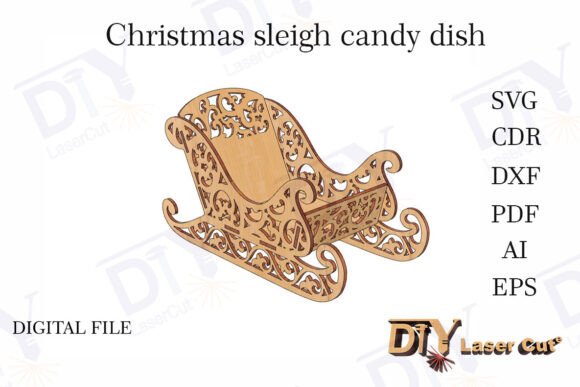
This type of digital asset is not merely an image; it is a set of precise instructions encoded in vector formats like AI, SVG, DXF, EPS, PDF, and CDR. The primary value lies in its ability to translate a 2D design into a 3D object with minimal assembly friction. When evaluating a Christmas sleigh candy dish laser cut file, one must look beyond the preview image and consider the engineering behind the joints, the compatibility with various software ecosystems, and the adaptability to different material densities.
Engineering and Design Precision
The effectiveness of any laser-cut project hinges on the accuracy of the source file. A well-constructed sleigh template typically consists of five distinct pieces designed to interlock or adhere seamlessly. The geometry of these pieces is critical. In professional applications, the kerf—the width of the material removed by the laser beam—must be accounted for in the design phase. High-quality templates anticipate this variable, ensuring that slots fit snugly without requiring excessive force or leaving unsightly gaps.
Most robust files are optimized for a specific material thickness, commonly 3 mm. This standard aligns with widely available plywood, MDF, and acrylic sheets. Deviating from this specification without adjusting the vector paths can lead to structural instability. For instance, using 4 mm material in a slot designed for 3 mm may cause the wood to splinter during assembly, while thinner material may result in a wobbly structure unable to support the weight of candies or fruits. The Christmas sleigh candy dish laser cut approach works best when the user respects these dimensional constraints or possesses the CAD skills to scale the joinery accordingly.
The inclusion of multiple file formats enhances the workflow for diverse users. A graphic designer might prefer the layered editing capabilities of an AI or EPS file, while a CNC operator might rely on the universal compatibility of DXF or SVG. This flexibility ensures that the design can be integrated into existing production pipelines, whether for a single home project or a small-batch commercial run.
Material Selection and Structural Integrity
The choice of material significantly influences the final presentation and durability of the sleigh. While the template provides the shape, the material provides the character. Birch plywood offers a warm, natural grain that suits traditional holiday themes, whereas painted MDF provides a uniform surface ideal for custom color schemes. Acrylic introduces a modern touch, allowing for translucent effects when paired with LED lighting underneath the dish.
From a practical standpoint, the 5-piece construction method simplifies the manufacturing process. Fewer parts mean fewer opportunities for alignment errors during assembly. However, the method of joining these parts matters. Some designs rely solely on friction fits, which can be elegant but may loosen over time if the dish is frequently handled or filled with heavy items. Others include tabs for glue application. For a candy dish intended for repeated seasonal use, reinforcing joints with a small amount of wood glue or epoxy is recommended to ensure long-term reliability.
It is also important to consider the load-bearing capacity of the design. A sleigh intended to hold hard candies differs structurally from one meant to serve as a fruit bowl. Users should evaluate the base surface area and the height of the retaining walls in the vector file. If the design appears too shallow for the intended contents, modifications may be necessary before cutting.
Workflow Efficiency and Usability
For entrepreneurs and freelancers managing tight deadlines during the holiday rush, workflow efficiency is paramount. A ready-to-cut Christmas sleigh candy dish laser cut file eliminates the hours required to draft a design from scratch. The immediate availability of the vector allows for rapid prototyping. A creator can test the fit with scrap material, adjust power and speed settings on their laser cutter, and move to full production within minutes.
The simplicity of the assembly process also makes these templates accessible to beginners. Unlike complex kinetic sculptures or multi-layered signs, a five-piece sleigh requires minimal post-processing. Sanding edges to remove burn marks and applying a finish are usually the only steps needed before the item is ready for display or sale. This low barrier to entry makes it an excellent project for educational settings or community workshops where participants range in skill level.
However, usability extends beyond assembly. It includes how well the file organizes layers. Professional templates often separate cut lines from engraving details onto different layers. This separation allows the operator to control the sequence of operations, ensuring that intricate surface patterns are etched before the outline is cut, preventing movement during the process.
Commercial Viability and Market Application
Small business owners and makers often seek products that offer a high perceived value with low production costs. A wooden sleigh candy dish fits this criterion well. The raw material cost for a 3 mm plywood sheet is relatively low, yet the finished product can command a premium price due to its handcrafted appearance and seasonal relevance. The Christmas sleigh candy dish laser cut concept scales effectively; once the initial setup is complete, producing ten units takes marginally more time than producing one.
These items serve multiple market niches. They function as corporate gifts, retail inventory for boutique shops, or add-ons for larger holiday decor packages. Their versatility allows them to be marketed not just as candy dishes, but as desk organizers, jewelry holders, or decorative accents year-round if the holiday-specific elements are subtle enough. Customization is another selling point; businesses can easily add logos or names via laser engraving before cutting the outline, creating personalized items that resonate with customers.
Limitations and Considerations
Despite their advantages, these templates are not without limitations. The fixed design means that every unit produced from the same file will look identical unless the user modifies the vector. For those seeking unique, one-of-a-kind art pieces, a generic template may feel too standardized. Additionally, the reliance on specific material thicknesses can be a constraint if a creator only has access to non-standard stock.
Environmental factors also play a role. Wood is hygroscopic and can warp with changes in humidity, potentially affecting the fit of the joints over time. Acrylic, while stable, can scratch easily and may show fingerprints. Users must weigh these material properties against the intended environment of the final product. Furthermore, laser cutting produces smoke and residue; proper ventilation and post-cut cleaning are necessary to maintain a professional finish.
Final Assessment for Creators
In conclusion, a Christmas sleigh candy dish laser cut template is a pragmatic tool for anyone looking to bridge digital design with physical creation. Its value is derived from precision, ease of assembly, and material versatility. For professionals, it offers a reliable foundation for commercial products. For hobbyists, it provides a satisfying project with immediate visual rewards.
Success with this asset depends on respecting the design parameters, selecting appropriate materials, and understanding the capabilities of your laser equipment. When executed correctly, the result is a charming, functional piece that captures the spirit of the season while demonstrating technical competence. Whether used for personal decoration or as part of a broader product line, this type of vector file remains a staple in the modern maker's library.